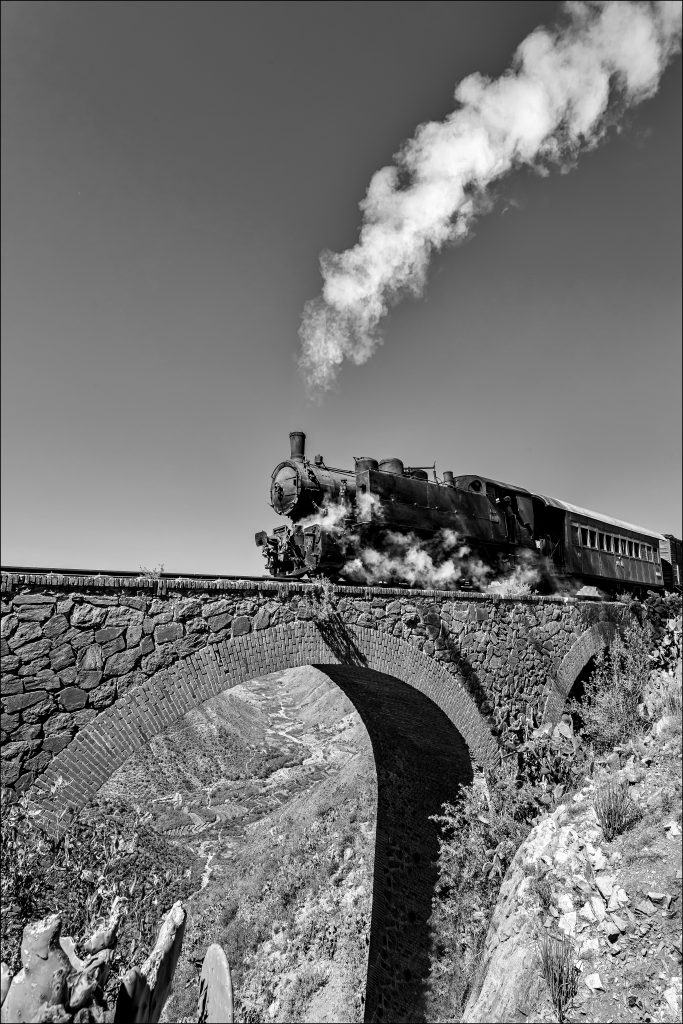
One of my unforgettable childhood impressions is seeing the shadow of steam of a passing steam locomotive billowing high above the street where I was walking by my grandparents‘ hand. This fascination never quite left me. And so, I became a volunteer on heritage railways and a fireman on steam locomotives. Further engagements for the railway heritage brought me on the boards of national and international heritage railway organisations for some decades. There I could shape part of the sectors presence and future.
Steam locomotives fascinate people because their inner workings are immediately visible. However, their significance in economic and social history lies in the fact that they were the first means of powering land transportation beyond human and animal strength. After the dawn of the railway age in 1825, they dominated rail transport for about 130 years, until the mid-20th century. Only a few steam locomotives are still in regular service today and most of them, coincidentally, in Germany.
But starting at the Talyllyn railway in Wales in 1951, volunteers and enthusiasts have kept steam locomotives in operation to run heritage or tourist trains on railways around the world. In these now more than 75 years, they have written an own chapter of railway history. Thus the fire has not yet been extinguished and the shadow of steam falls into the present. The Long Shadow of Steam project shall be a reminiscence to those who contribute to this chapter and pay tribute to the colleagues who keep these locomotives running through their hard work.
The project redefines the contemporary photography of steam locomotives and trains around the world. Whenever possible the objects are deliberatly positioned in juxtapostion to the contemporary environment rather than in a seemingly historical setting. Thus generating an uncanny interference of our present with the time we came from. Sadly, not in all countries the present differs as much from the past as one may wish. The fact that these locomotives nevertheless represent an outdated technique is conveyed by the presentation in black and white. As it corresponds to our visual habits of historical photography.